We certify what you can do — not how long you sat there.
Get credit for anything you can already demonstrate. Build the path from what's left. Then you teach a real class on camera, and a named faculty reviewer marks the whole session against the published rubric — because that's the only part that proves anything.
A dated cohort, not a video library you binge alone. Take Module 0 free, see the whole curriculum as it's built, and join the founding list — deposits open before October 1.
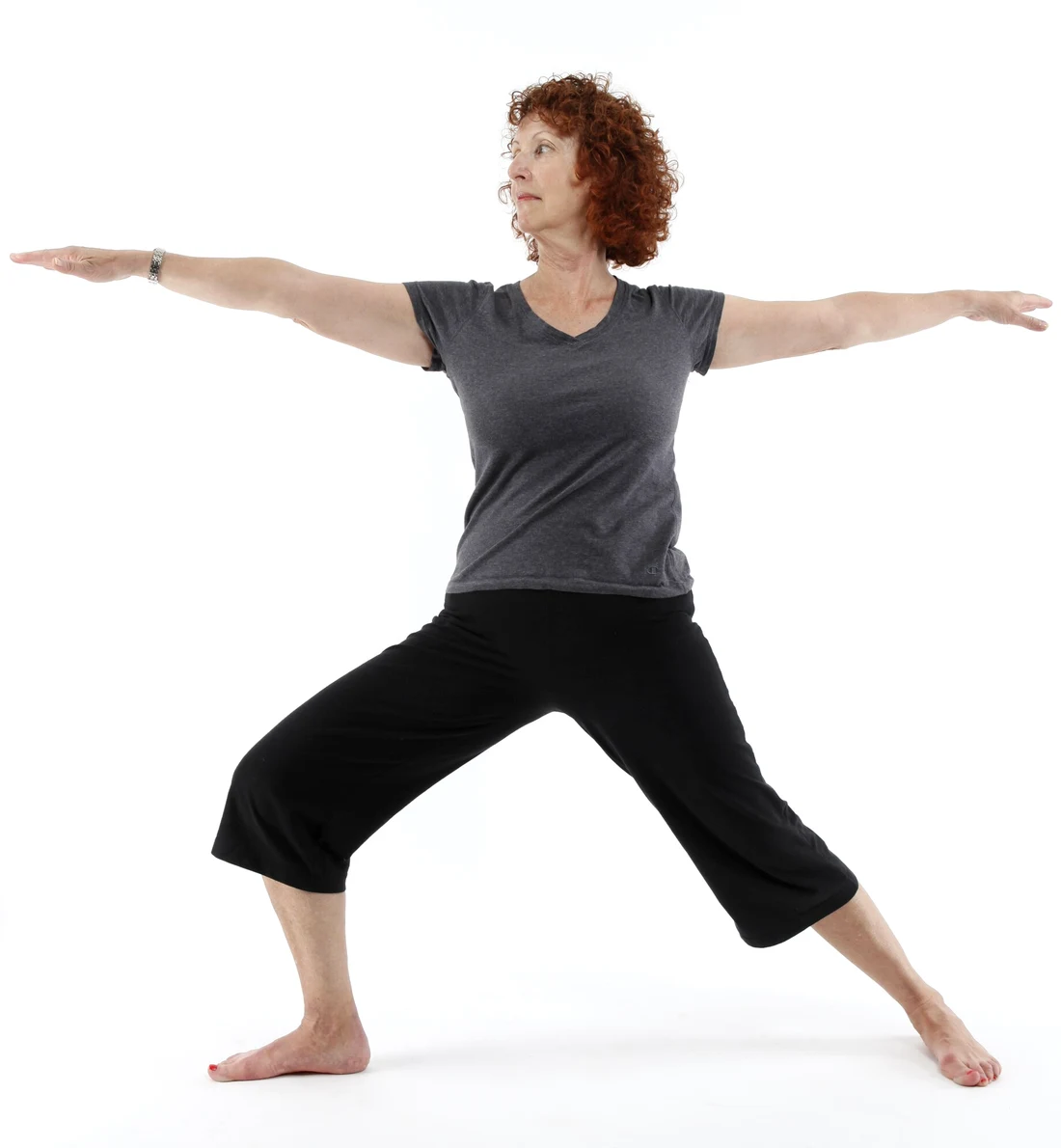 Unit A1.4 · Warrior II · 6 min
It teaches itself — the narration drives the visuals, the pose rotates when you're shown the angle an error is visible from, the joint layer comes up when load is explained, and the body changes to different proportions when that matters. It stops three times to check a teaching decision, and tells you why an answer was wrong.
And you choose who teaches it. Raj, Priya — or read one paragraph aloud and hear the whole unit re-narrated in your own voice. No other training can do that, because they filmed one person once.
Free, no account. This is the format every unit is built to — and it's the fairest way to judge the rest before you pay for it.
Six terms, the mangled version and the correct version back to back in the same voice, then record yourself and hear the difference. Nobody has ever corrected you, because most trainings never taught it either.
Hear the difference →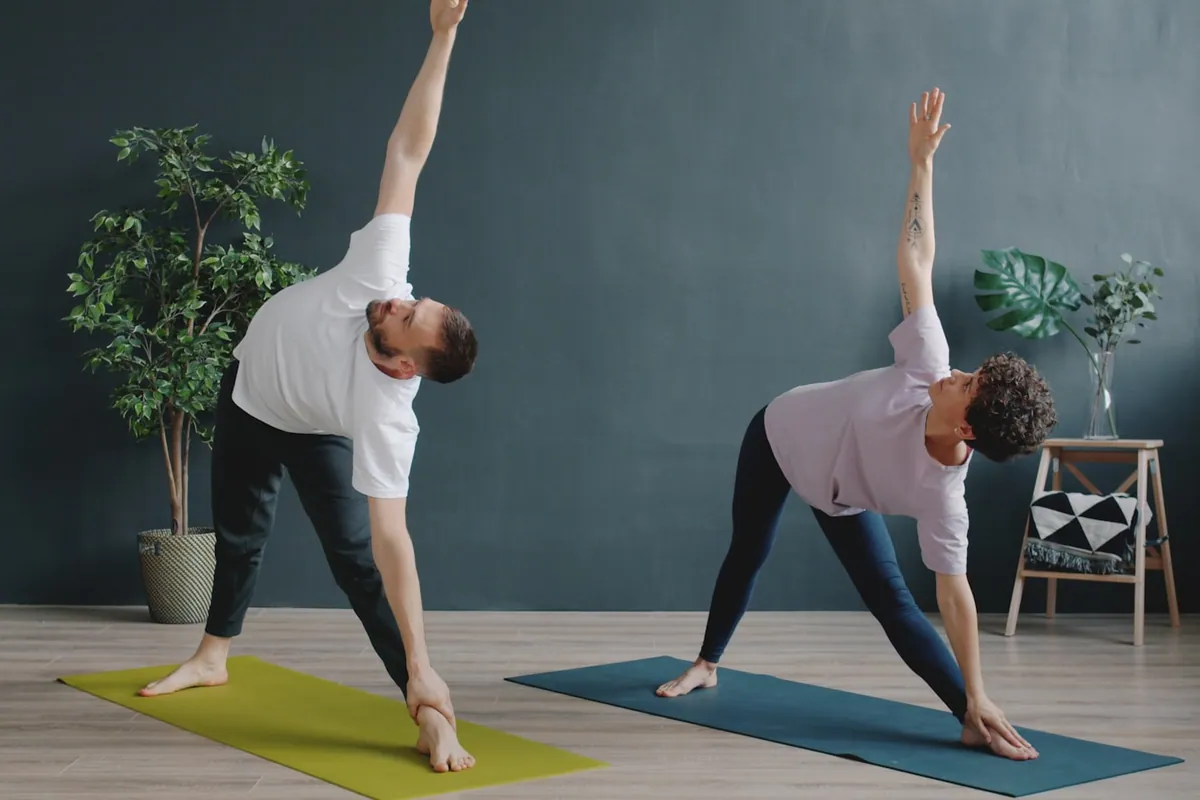
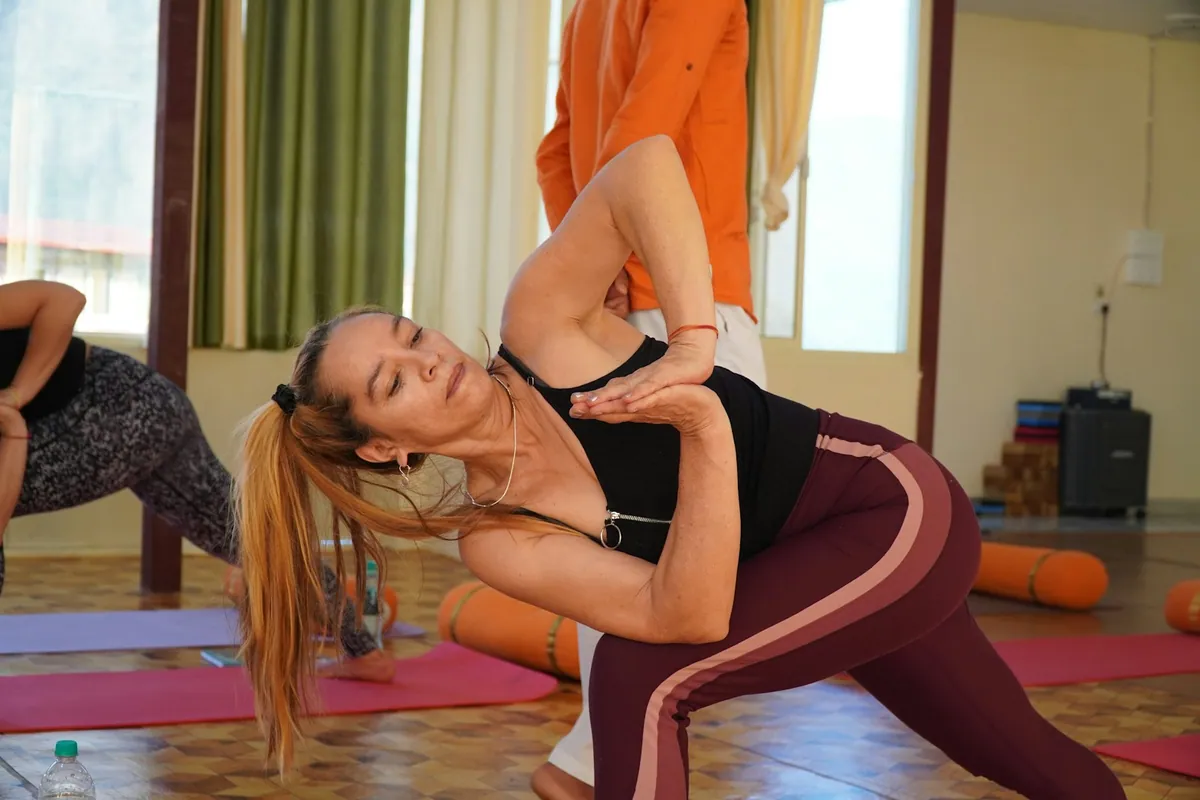
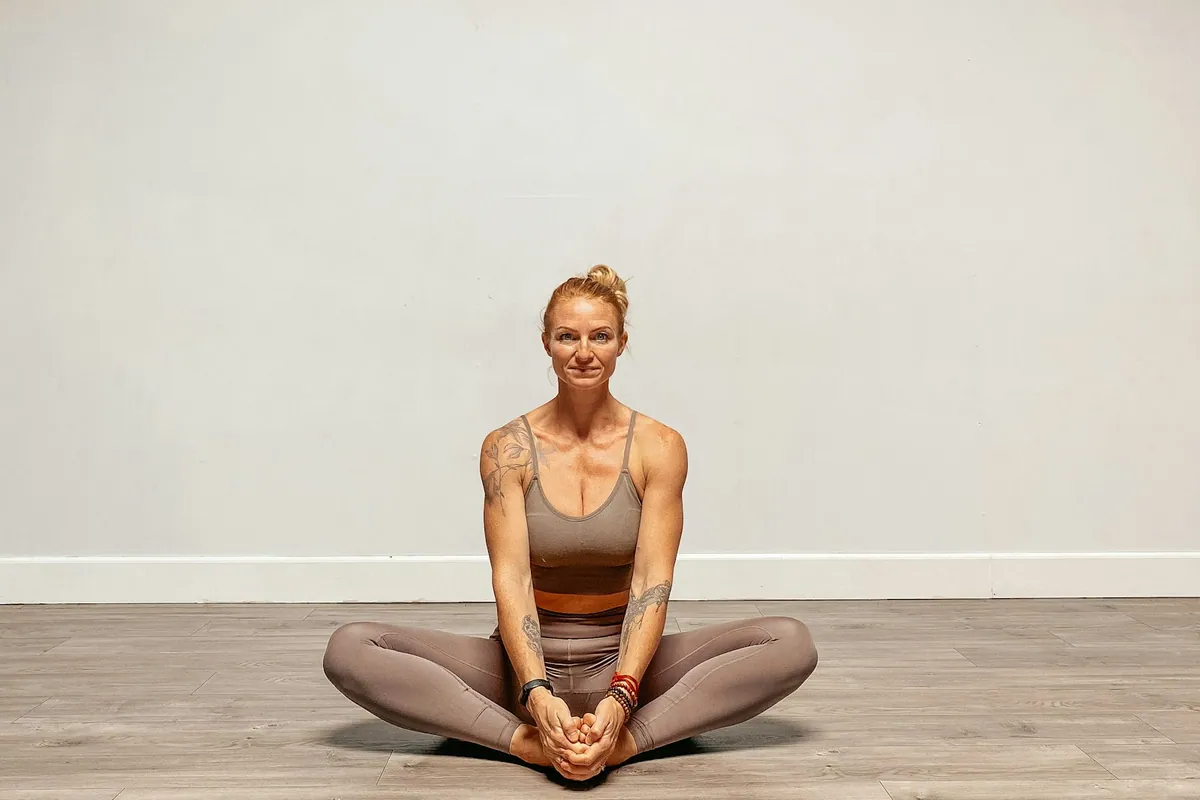
Certification is about what happens in a room with other people. The 3D and the diagrams exist to get you ready for that — not to replace it.
Most programs show you a sales page and a promise. We're publishing the curriculum as it's written, with the review status and the reviewer's name on every module — so you can judge the work before you pay for it.
The orientation module — what teaching actually involves, the four paths, and the standard you'll be held to. No account, no card, no obligation.
Every module, its objectives, and its current status — drafting, in faculty review, or approved. Updated as we go.
When a module is approved, the teacher who approved it is named on it. If a module hasn't been reviewed yet, it says so.
From October 1, released weekly with the cohort — so you move with a group instead of drifting through a video library alone. A cycle may hold one longer unit or two short ones, depending on your path.
The most common reason people never train is a private belief that they aren't good enough yet. Here's the honest version, so you can stop guessing.
Teaching is watching, saying, sequencing and judging. None of those require a deep backbend. Some of the best teachers have modest practices and exceptional eyes.
You need to understand why a shape works and what to change when a body can't make it. Being naturally open often makes that harder to learn, not easier.
Many candidates have never taught. Your path is built from where you actually are — that's what the skills check is for.
The practicum is a real class you record — a few friends in a living room counts. We show you how to set it up and give you the consent forms.
A consistent practice, a few hours a week for twelve weeks, and willingness to be corrected by a human who will say plainly when something isn't met yet.
Anyone who wants a certificate without being assessed. The observed practicum can never be skipped, and a reviewer can decline to pass you.
Most graduates finish without enough observed teaching practice, and without a clear path to their first students — nobody told them how to get hired, what to charge, or where students come from. So most certified teachers never really teach.
Programs measure the time you sat there, not what you can do. You finish with a number on a certificate and no clear answer to what you're actually qualified to teach.
Ten years of practice or a coaching career earns you nothing. Everyone sits through the same beginner material at the same price.
Build a website, learn marketing, find students, handle bookings and insurance. You wanted to teach yoga, not run a startup.
Every step lives on Yoga.org, under one account. Start wherever you actually are.
Poses, philosophy, glossary
Find your level, free
8 modules · $22
Assessed, personalized
Faculty-reviewed
Directory + marketing
Not a syllabus you read — diagrams, 3D pose data you can rotate, and a rubric you're measured against. Everything below is real material from the course as it stands today.

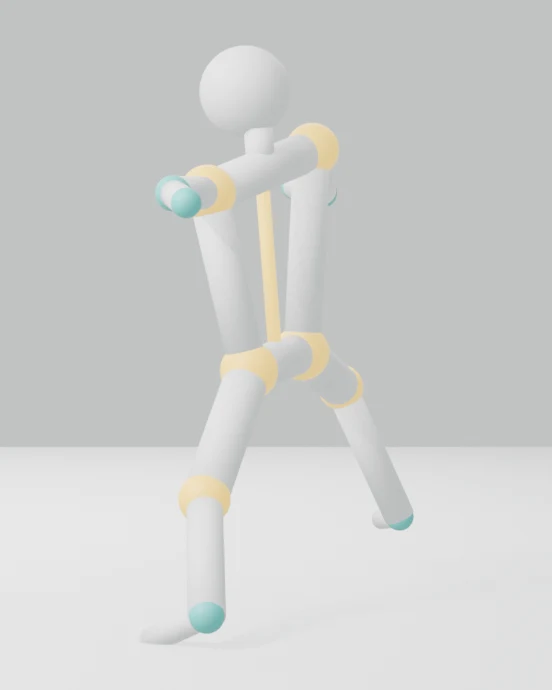
That's one photograph of a real teacher, turned into a pose you can walk all the way around — and then look inside, with the spine line and the joints you're being asked to check lit up. A video can only ever show you where the camera happened to stand. See how it's built →
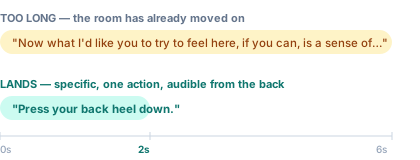
Most new teachers narrate. The room has already moved on. You're assessed on cues that are short, specific, and audible from the back row.
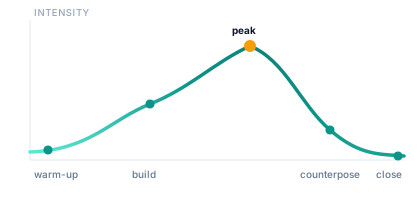
Warm-up, build, peak, counterpose, close — serving one stated intention. You'll submit a class plan and be marked against a rubric, not a vibe.
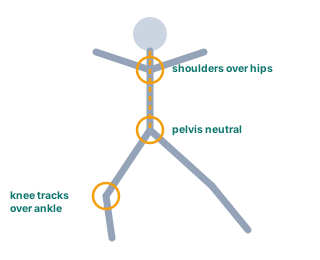
Three checkpoints, in order, on every standing pose. Learn to scan a room in the order that catches injuries first.
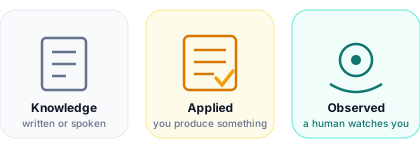
Knowledge can be tested out of. Applied work is marked against a rubric. Observed teaching means a named human watches you — and that one can never be skipped. Read the standard →
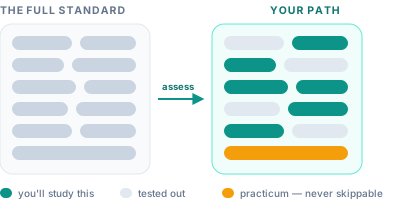
We start from the whole standard, subtract what you can already demonstrate, and what's left is your path — shorter and cheaper the more you can prove. The practicum stays, always. Build your path →
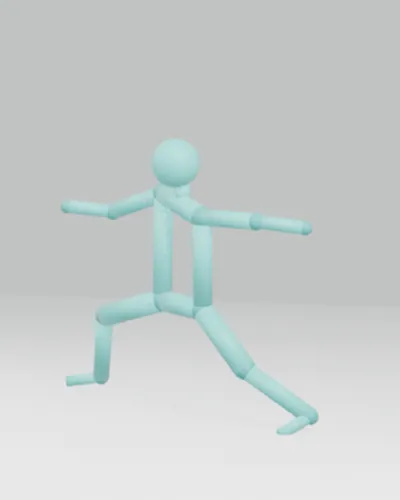
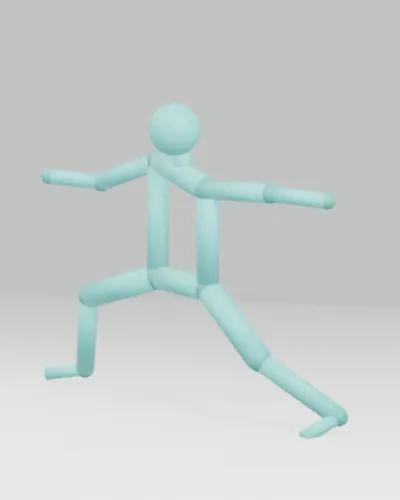
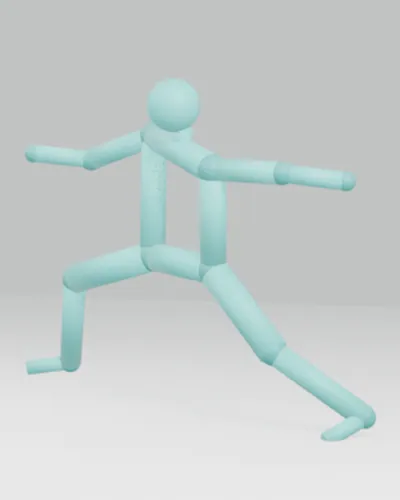
One capture, three bodies. Same joint angles, different segment lengths — because a long-femur body genuinely cannot make the same shape as a short-femur one, and every other training pretends otherwise. Try it with your body →
Drafted and in faculty review. Every diagram above is Yoga.org's own work — no stock imagery, no embedded video that can disappear.
They're genuinely different jobs, so they get genuinely different training. Your path is built from how you actually plan to teach.
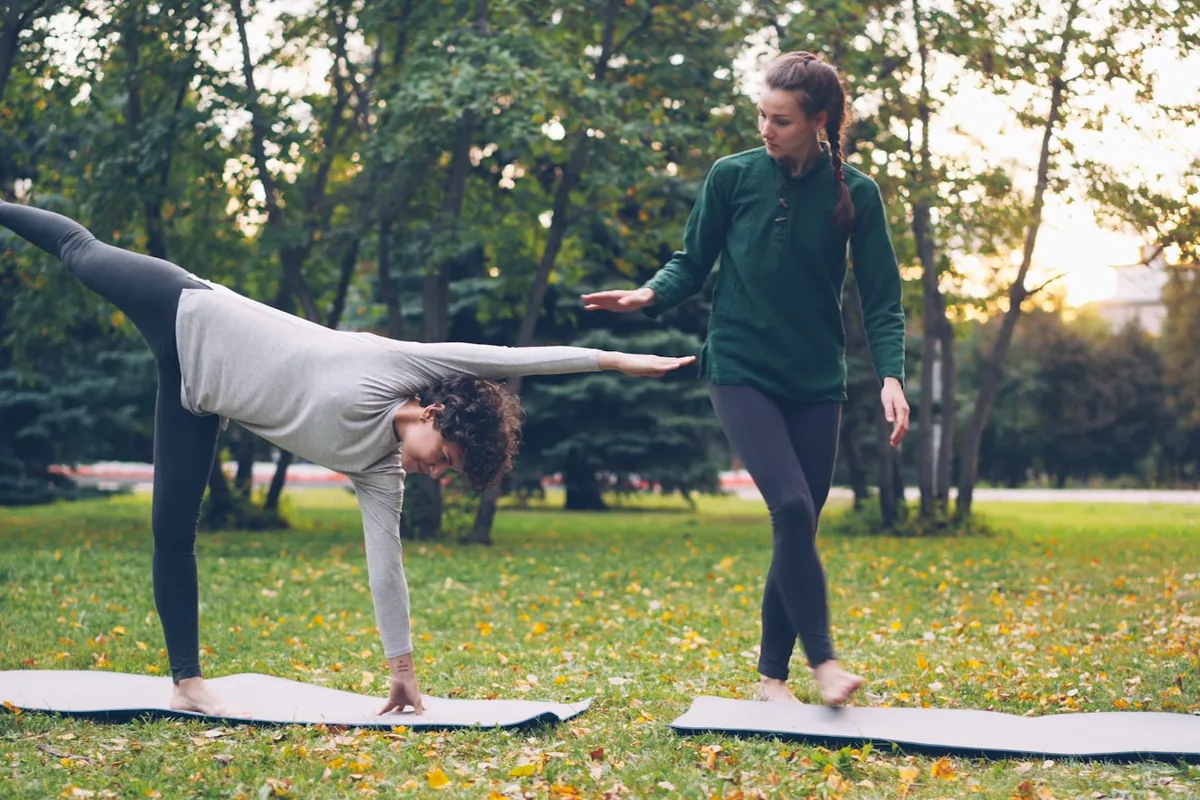
One-to-one work in homes, studios, or outdoors. Client intake, hands-on adjustments, safety screening, and what to charge per session.
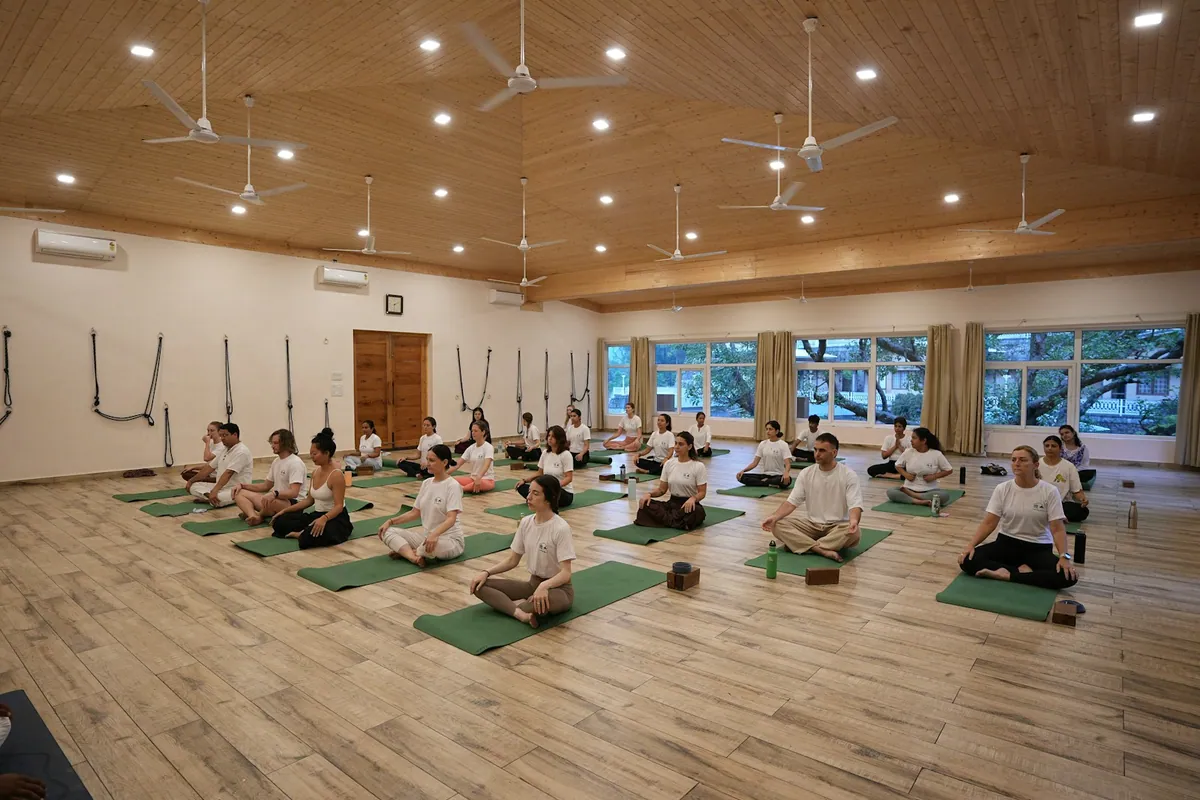
Leading a room. Sequencing for mixed levels, cueing without demonstrating, studio auditions, and getting on a schedule by subbing.
Camera and sound setup, cueing what you can't physically correct, time zones, scheduling, and taking payments.
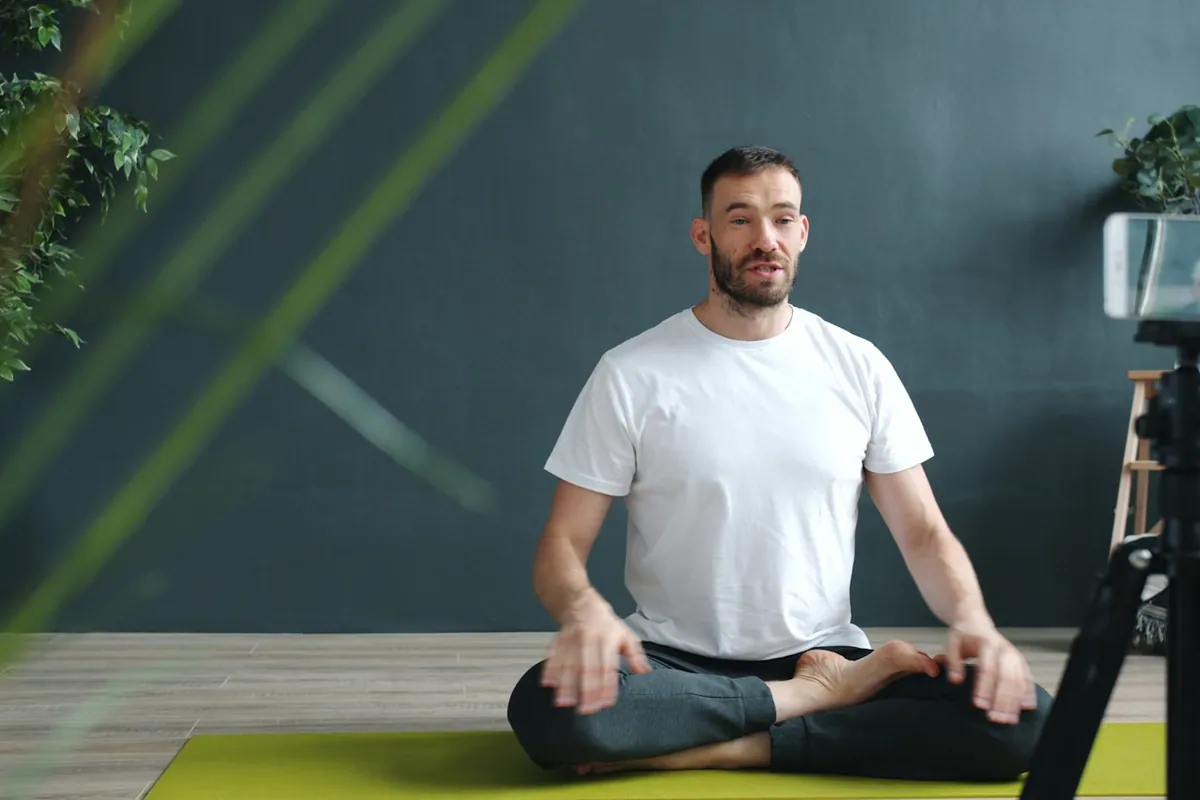
Live versus recorded, choosing a platform, building an audience, and pricing a class pass or subscription.
Yoga philosophy, meditation, pranayama, Sanskrit, and ethics — credentialed without the asana teaching track. Built for therapists, coaches, healthcare workers, and corporate wellness leads who want the depth and the credential, not a studio job.
Add a focus to any teaching path: prenatal, chair and accessible yoga, yin, restorative, trauma-informed, or teaching older adults.
An hour count tells a studio how long you sat in a room. It says nothing about whether you can teach. We publish the competencies instead — and certify against them.
A skills check sets your starting point. Ten years of practice means you skip what you can already show us — and finish sooner. Only possible because we count competencies, not hours.
Read the full competency list before you enroll — every skill you'll be held to. So can the studio hiring you, and the student choosing you.
Named faculty review the curriculum and your final practicum. A human decides whether you're certified — never an algorithm.
Pricing, first clients, insurance, bookings, and how to get on a studio schedule. The part every other program leaves out.
We handle the part that isn't teaching.
Built from your assessment — text, illustrated pose breakdowns, video, and practice work. Only what you actually need.
You submit recorded teaching. A named faculty member reviews it and gives written feedback before certification.
A public Yoga.org page any studio or client can check in one click. Not a PDF anyone could fake.
Priority placement, the inquiries we send you, your booking link and business tools. Worth $199 a year; included free for your first year, then locked at $199/year or $29/month for founding members. Being listed and verified is free forever — membership is what puts you at the top and routes students to you.
Yoga.org buys and earns the traffic; certified teachers get the inquiries. You'll see every lead we send you in your dashboard.
Pricing guidance, liability and insurance walkthrough, client intake forms, and waiver templates.
We're building this program in the open over the next twelve months. Every module, upgrade and tool we ship in your first year is included — and while you keep your listing and membership, your certification is upgraded to the current standard as it evolves. The credential never goes stale.
Everyone in the founding class becomes a Yoga.org affiliate and ambassador, and earns referral commissions on future cohorts.
An introductory rate, not our price. Online teacher trainings start around $999 and in-person programs run $1,500–$4,500; only discount resellers sit under $400. Cohort One is priced this way because you are helping us build it — everyone pays $299 regardless of path length — a $99 deposit refundable until October 1, then $200 at the start or two monthly payments of $100. Same $299 either way; we don't charge more for paying in installments. Later cohorts are priced individually from the assessment, and the introductory rate is not repeated.
Or take Module 0 free first — no card, no obligation.
So we publish ours — the rubric, the faculty who review it, and how the material gets made.
Every competency a certified teacher must demonstrate, written in plain language and public. Read it before you enroll — or before you hire.
Practicing teachers with real studios and real students, plus a medical advisor on anatomy and safety. Every module lists who reviewed it.
A credential everyone passes is worth nothing. Starting with Cohort One we publish completion, pass, resubmission and reviewer-turnaround figures — there is no data to show yet, and we won't invent any.

Head of Yoga Content & Outreach
Yoga instructor and author; practitioner of NLP, hypnotherapy, and reiki. Invited to review teaching methodology, philosophy, and curriculum structure.
Ayurvedic & Medical Advisor
Board-certified physician and anesthesiologist, Ayurvedic practitioner. Invited to review anatomy, contraindications, and every safety module.
We're adding experienced teachers who have built real practices — studio owners, private-client teachers, and online instructors — to review each specialization.
Faculty for Cohort One are being confirmed now; each reviewer is published above once their engagement is signed. No module is shown as approved until a named reviewer has actually signed it off — current status for every module is on the curriculum board.
We use AI to assemble the best material fast, then real teachers correct it — and their corrections become permanent standards the AI must follow.
Curriculum assembled and structured at speed
Several AI models cross-check each other's work
Named teachers correct anatomy, safety, philosophy
Corrections become rules every future module follows
Pose demonstrations are filmed with real teachers — never AI-generated. Instruction that ignores an injury, a pregnancy, a medical condition or an individual's anatomy can raise the risk of harm, so the demonstration has to be right.
Most certifications give you a number and a logo. Ours gives you a public page: the competencies that teacher was assessed on, who watched them teach, how long the class was, and whether they had to resubmit. Read it before you put them in front of your members.
A permanent public record per credential — no login, no fee. See the sample record and exactly which fields it carries.
Every certified teacher passed a recorded class marked competency by competency by a named reviewer. You can read what that review looks like.
Thirty-six published competencies, twelve of them observed by a human. Not hours of attendance. And we'll publish our pass rate.
Straight answer, since it matters to you: we are not Yoga Alliance registered, and if your insurer or your policy requires RYT-200 our credential does not substitute for it. Cohort One begins October 2026, so the registry is empty until then and the record you'll see is a labeled sample.
You could build a website, learn Google Ads, and figure out local SEO. Or you could be listed on Yoga.org, where we do that once — properly — for every certified teacher at the same time.
Being listed and verified is free forever once you're certified. Teacher Membership — $29 a month or $199 a year, free for your first year — puts you above claimed and unclaimed listings and routes the inquiries to you.
Students searching for teachers land on Yoga.org, not on a site you had to build. Every listing benefits from the same spend.
Your dashboard shows the inquiries and bookings we sent you. No guessing whether the membership is worth it — one booked private client covers most of a year of it.
It's free, there's no account and no card, and it's the same material the paying cohort gets on day one. Take it, judge the quality, then decide whether Cohort One is for you.
Start Module 0 — free →